
The Nurturing a Child’s Podcast
Grow Together in Conscientious Relationships
About the Podcast
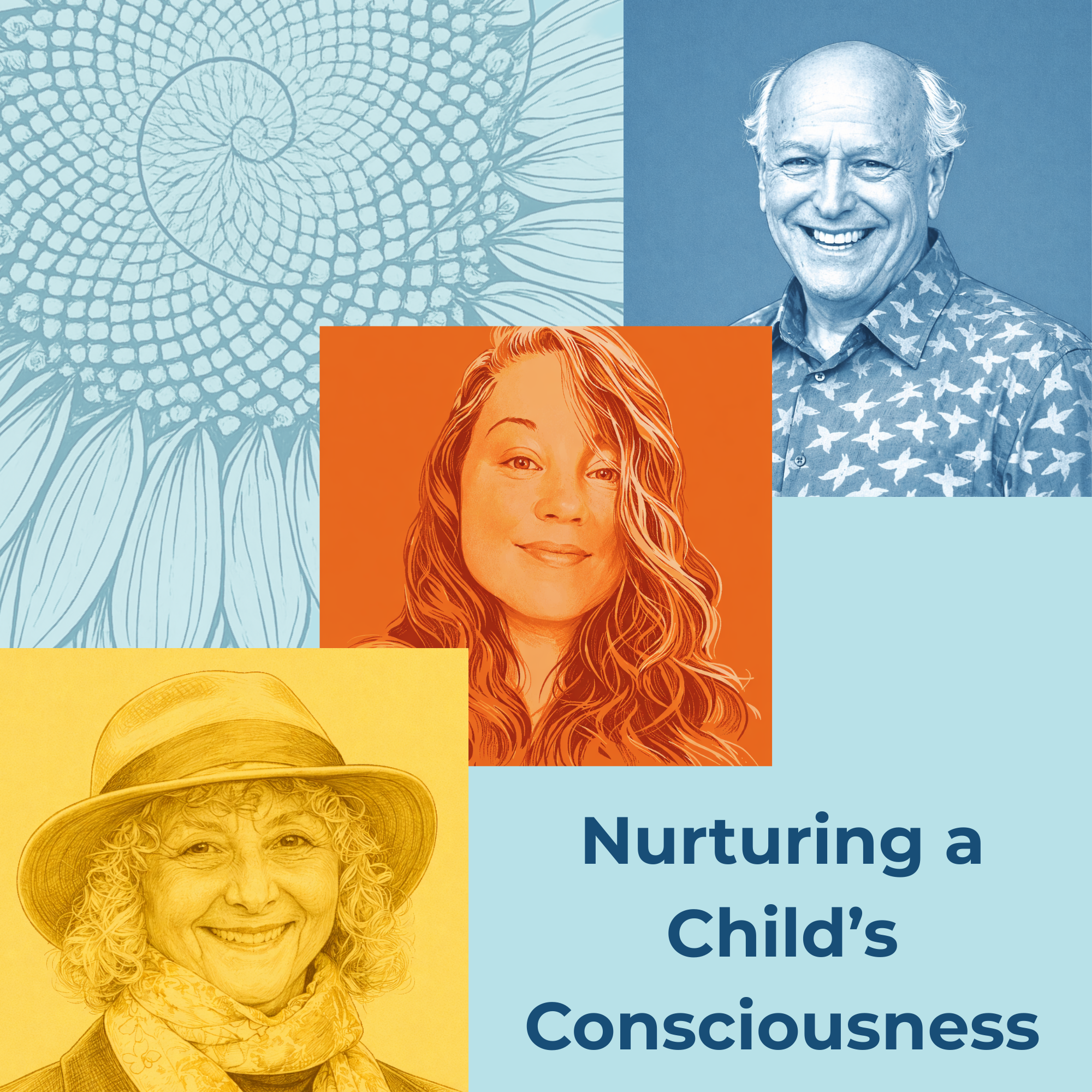
The Nurturing a Child’s Consciousness podcast is Hosted by Brandy McCray, M.A. and features Josette Luvmour, Ph.D. and Ba Luvmour, M.A. the originators of Natural Learning Relationships.
The Nurturing a Child’s Consciousness podcast series is devoted to Whole Human Development. It features Natural Learning Relationships (NLR). At its core, NLR maps the development of the innate capacities in children and offers guidelines to creating relationships that lead to optimal well-being for both the child and the caregiver(s).
This series of podcasts will allow you to see through a child’s eyes and feel through a child’s heart. It reveals the inner workings of the child’s consciousness—how they see and know themselves and their world. We enter their perspective and so can nurture their actualization of well-being.

Stream on your favorite platform!


Sign up for podcast news!

View All Episodes and Transcripts Below
-
What happens when we stop viewing children through behavior labels and deficit-based models? How can we nurture and recognize well-being in children? What happens when we do?
This episode looks at how conditioning around pathology shapes perception, often narrowing how we understand and relate to children. We explore a different lens grounded in well-being, where development and and learning are seen as adaptive, relational processes rather than problems to fix. This shift changes what we notice, how we respond, and what becomes possible in our relationships with children. It provides the ground, the foundation, for emergent transformation in children, family, education, community, and culture.
-
We explore how patterns of interconnectedness show up at every level of life, from relational dynamics to embodied experience. This episode situates Natural Learning Relationships as both a practical approach to daily relationships and a reflection of larger organizing principles in living systems.
-
Join us as we examine how children organize their experience and construct meaning. In this episode we clarifiy different fields of knowing and addresses common confusions that arise when adults mistake learned conditioning for true self-knowledge. We also introduce the developmental background that gave rise to Natural Learning Relationships.
-
In this episode we focus on how children develop self-trust and why it forms the foundation for healthy relationships later in life. We connect early relational experience with autonomy, discernment, and the ability to form satisfying partnerships.
-
In this episode, we clarify what distinguishes Natural Learning Relationships from conventional parenting strategies. We examines the underlying principles that make the approach developmentally sound, relationally coherent, and sustainable over time.
-
What exactly is a developmental nourishment? Why does Natural Learning Relationships talk about fields of knowing instead of stages? How does self-observation emerge in children? And what do children have to teach us about justice?
In this listener Q&A episode, Ba, Josette, and Brandy respond to questions from the community and explore some of the most foundational ideas in Natural Learning Relationships. From child development and self-trust to relationship, meaning-making, and the lifelong unfolding of human capacities, this conversation invites us to see both children and ourselves through a different lens.
View the Transcript (Coming soon)
-
In today’s podcast, we explore rites of passage through a developmental lens. Joined by Alison DeLong and Dillon Banker, we discuss a recent rite of passage they facilitated for children and families, the essential ingredients of rites of passage, and why intentionally recognizing developmental transitions matters from childhood through young adulthood especially in modern times.
-
In this podcast, we explore common misconceptions that arise when adult expectations do not align with a child’s developmental reality. We discuss why emotional transparency and internal coherence matter more than performance or technique, and how relational honesty strengthens connection.
Note from the podcast:
Children do not need perfect adults. They need adults who are willing to L.E.A.R.N.
Look: They need adults who Look beyond behavior to understand how the child is experiencing the world.
Expectations: They need adults who recognize when their own Expectations exceed the child's developmental capacities.
Alignment: They need adults who notice when Alignment has been lost and understand that relationships can always be repaired.
Return: They need adults who Return to the child's current Field-of-Knowing instead of expecting the child to think, feel, or behave beyond their developmental capacities.
Nurture: And they need adults who continue to Nurture their Field-of-Knowing, remembering that mistakes are not the problem.
Our willingness to learn, repair, and begin again is what strengthens trust.
Listen Now
-
In this episode we examine how inherited and learned relational patterns shape adult responses to children. We offer a practical look at how parents and educators can recognize and shift these patterns without blame, while strengthening relational presence.
Referenced in the podcast: SUPPORTIVE STEPS FOR NURTURING FAMILY WELL-BEING
Interested in take the course Intro to Natural Learning Relationships?
This experiential course introduces the Natural Learning Relationships (NLR) framework for supporting children’s development in love, trust, spirituality, safety, and social justice. Grounded in decades of research and practice, participants learn practical, evidence-informed ways to foster trust, empathy, and mutual respect while promoting well-being and justice in diverse family and educational settings.
Designed for educators, caregivers, parents, and professionals, the course provides insight and inspiration for transforming everyday interactions into opportunities for connection, growth, and healing.
This 7 week course launches summer of 2026. It meets live on Zoom once a week for 2 hours. To be scheduled together with particpants. Cost $400. Payment plans available.
The course is open to anyone interested. If you decide to continue to complete the entire Ceritificate Program, the course fee will be applied to your total tution for the certificate program.